Two Worlds of Fishing, One Departure Point
From Tamarindo Beach, you can access two completely different fishing ecosystems. Inshore fishing keeps you within sight of the coastline in calm, protected waters. Offshore fishing takes you into the open Pacific where the ocean is deep and the fish are massive. Both are world-class. The question is which one fits you.
Inshore Fishing: The Close-to-Shore Experience
The Setting
Inshore fishing in Tamarindo means working the waters within 1 to 8 miles of the coast. You fish along beaches, rocky points, reef lines, river mouths, and mangrove edges. The water is relatively shallow (15-100 feet) and typically calm.
Target Species
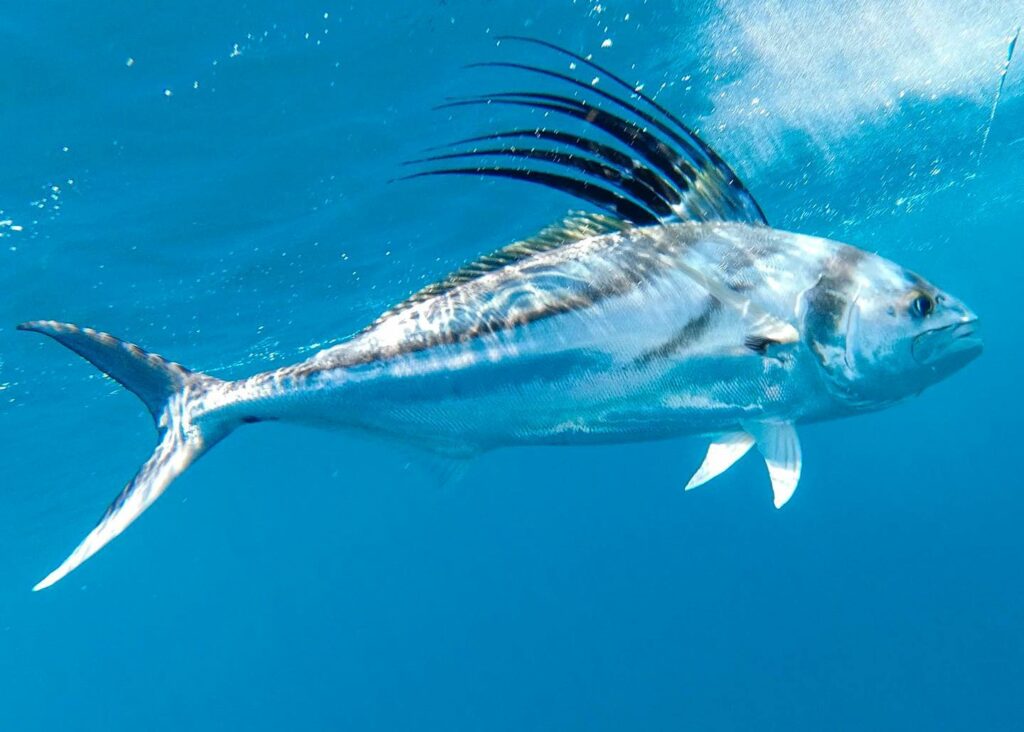
- Roosterfish - The star of inshore. Iconic dorsal fin, powerful runs, spectacular fighter (20-60 lbs)
- Cubera Snapper - Hard-pulling brutes around rocky structure (15-50 lbs)
- Jack Crevalle - Aggressive schooling fish with explosive surface strikes (10-40 lbs)
- Red Snapper - Excellent eating, found around reefs (5-20 lbs)
- Sierra Mackerel - Fast and fun on light tackle (5-12 lbs)
- Grouper - Bottom dwellers around rocky ledges (10-30 lbs)
- Needlefish & Barracuda - Bonus species that add variety
Fishing Methods
- Live bait drifting - Sardines or small baitfish drifted near structure
- Bottom fishing - Weighted rigs dropped to reef structures
- Casting - Throwing lures or flies to visible fish
- Trolling - Slow-trolling live baits along the shoreline
- Sight fishing - Spotting roosterfish in clear water and presenting bait
What the Day Looks Like
- Depart around 7:00 AM
- Fish calm, scenic waters with coastline views
- Consistent action throughout the morning
- Multiple species per trip is normal
- Return by 11:00 AM - 12:00 PM
- Duration: 4-5 hours
Best For
- Families with children
- Anglers who get seasick
- Budget-conscious trips
- First-time fishers
- Light tackle enthusiasts
- Anyone short on time
- Catch-and-eat (snapper, sierra)
Offshore Fishing: The Deep Blue Adventure
The Setting
Offshore fishing means running 20 to 40+ miles out to where the ocean floor drops to thousands of feet. You are in open Pacific water. Deep blue, no land in sight, surrounded by the biggest predators in the ocean.
Target Species
- Pacific Sailfish - Costa Rica's marquee billfish (80-120 lbs)
- Blue Marlin - The ultimate trophy (300-800+ lbs)
- Black Marlin - Raw power and size (200-600+ lbs)
- Striped Marlin - Acrobatic and beautiful (100-200 lbs)
- Yellowfin Tuna - Brute strength, incredible eating (40-200+ lbs)
- Mahi-Mahi (Dorado) - Colorful, acrobatic, delicious (15-50 lbs)
- Wahoo - Lightning-fast strikes (30-80 lbs)
Fishing Methods
- Trolling - Running a spread of lures and rigged baits at 7-9 knots
- Live bait fishing - Drifting or slow-trolling live tuna or bonito for marlin
- Teaser and pitch - Raising fish with hookless teasers, then presenting a bait
- Chunking - Cutting bait and creating a slick to draw in tuna
- Popping and jigging - Casting topwater plugs or vertical jigs to tuna schools
What the Day Looks Like
- Depart at 5:30-6:00 AM (early start for maximum fishing time)
- 45 min to 1.5 hour run to the fishing grounds
- Fish from approximately 7:00 AM to 1:00 PM
- Longer periods between bites, but much bigger fish
- Return by 2:00-2:30 PM
- Duration: 7-8 hours
Best For
- Experienced anglers seeking trophy fish
- Bucket-list billfish hunters
- Groups of adult friends
- Anglers comfortable on open water
- Anyone targeting sailfish, marlin, or large tuna
- Adrenaline seekers
Side-by-Side Comparison
| Factor | Inshore | Offshore |
|---|---|---|
| Distance from shore | 1-8 miles | 20-40+ miles |
| Water depth | 15-100 feet | 300-6,000+ feet |
| Seas/comfort | Calm, protected | Open ocean swells |
| Duration | 4-5 hours | 7-8 hours |
| Species size | 5-60 lbs | 30-800+ lbs |
| Action frequency | Constant bites | Fewer but bigger |
| Seasickness risk | Very low | Moderate |
| Trip cost | $450-$900 | $900-$2,500 |
| Physical demand | Light-moderate | Moderate-heavy |
| Best season | Year-round | Dec-April (billfish), May-Oct (tuna) |
| Keep fish to eat | Snapper, sierra | Tuna, mahi, wahoo |
| Trophy potential | Big roosterfish | Marlin, sailfish |
Decision Guide
Choose Inshore if you:
- Have kids under 12 in your group
- Are prone to motion sickness
- Want constant rod-bending action
- Prefer a shorter, more relaxed trip
- Are fishing for the first time
- Have a tighter budget
- Want to catch dinner (snapper is incredible eating)
Choose Offshore if you:
- Dream of catching a sailfish or marlin
- Are an experienced angler wanting a challenge
- Have a full group of adults
- Can handle open ocean conditions
- Are visiting during peak billfish season (Dec-April)
- Want the ultimate "big fish" story
- Have 7-8 hours to dedicate to fishing
Choose Both (Best of Both Worlds): If you have 2+ days, do one of each. Day 1 inshore for roosterfish and snapper, Day 2 offshore for sailfish and tuna. You experience the full range of what Tamarindo offers, and the variety keeps every day fresh.
Can You Do Both in One Day?
Sort of. A "combo trip" (5-6 hours) fishes both inshore and nearshore waters. You will not reach the deep offshore grounds where sailfish and marlin live, but you can hit reefs for snapper and mahi-mahi while also targeting roosterfish along the beaches. It is a good middle-ground option.
Let Us Help You Decide
Contact us with your group details: ages, experience level, what species excite you most, and your budget. We will recommend the right trip type and match you with the best boat and crew for it.